Which Version of Tower Rush Is the Original?
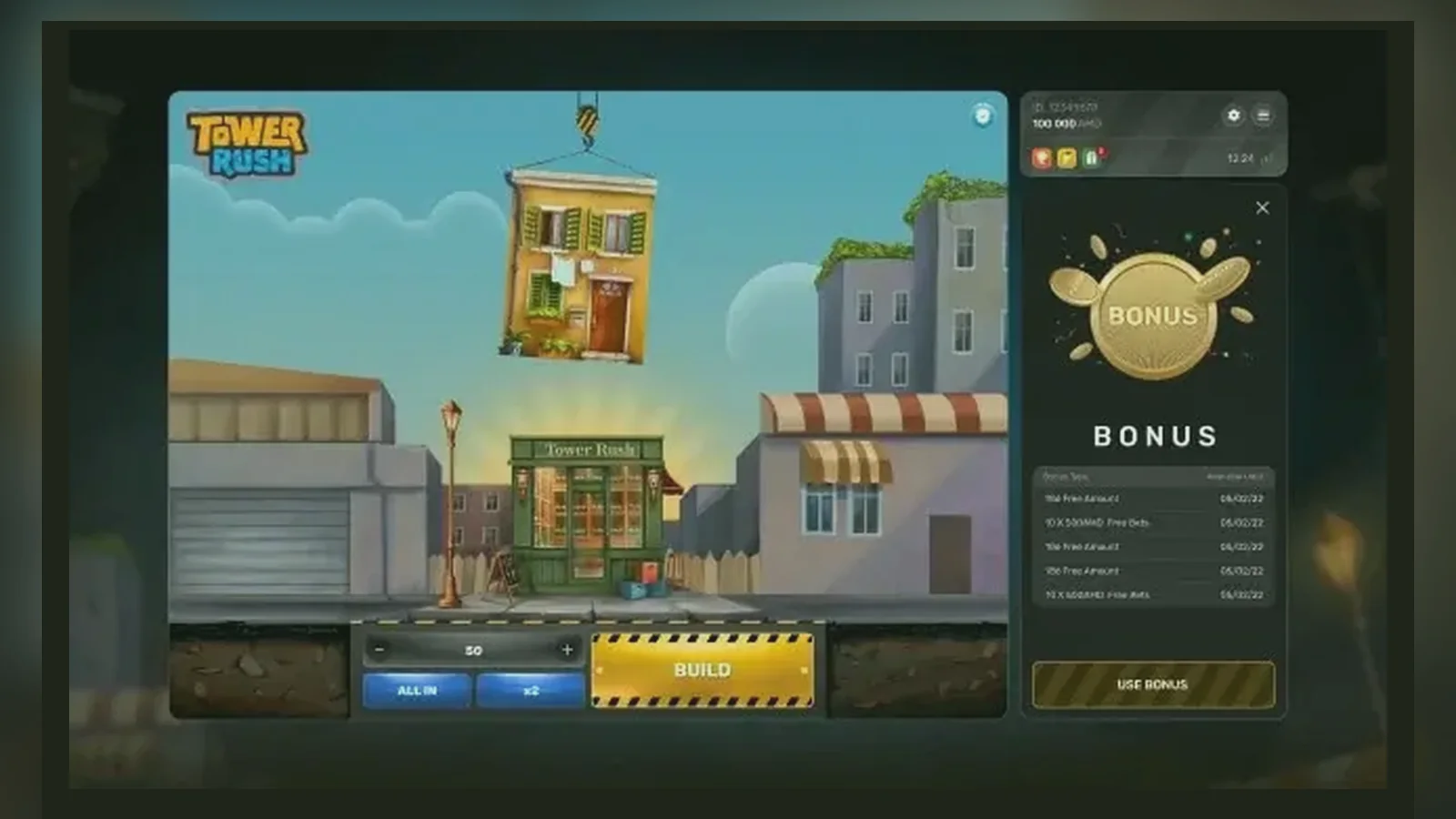
A colleague of mine played what she thought was Tower Rush for three weeks before realising the multiplier table didn't match anything she'd read. The clone she'd found had different payout caps, no certification mark, and no UKGC licence in the footer. She'd been chasing results from a completely different maths model.
This page walks through the original game: who made it, how certification works, what the technical sheet actually says, how each round plays from your seat, which clones are out there, and a ten-second check that you're on the legitimate version. No opinions—just the mechanics, the numbers, and the market facts that matter if you're playing from the United Kingdom.
Who Built the Original and How Certification Works
The original Tower Rush was developed by a studio that submits its games to independent testing labs—organisations that verify the random number generator, check that advertised return percentages match the actual code, and confirm the game behaves as documented. Once a lab issues a certificate, operators licensed by the UK Gambling Commission can integrate the game into their lobbies.
In the United Kingdom, every site offering Tower Rush must hold a remote gambling licence from the UKGC. You'll find the licence number in the footer of any legitimate operator. That licence ties the operator to consumer-protection rules: stake caps of £5 per round for most players and £2 for those aged 18 to 24, affordability checks from £150 net deposits a month, and GAMSTOP self-exclusion. If the footer shows no UKGC licence number, the site is illegal to market here.
Clones sometimes copy the visual layout but run on different maths. A clone might cap the maximum win lower, skip certification, or operate without a UK licence. The easiest way to confirm you're on the original is to cross-reference the provider name in the game-info panel with the UKGC register entry for the operator.
How a Round Actually Works From the Player's Seat
You choose a stake between £0.10 and £5.00—or £2.00 if you're 18 to 24—and the game presents a tower divided into levels. Each level hides a multiplier behind a tile. You pick a tile, the multiplier reveals, your running total updates, and you decide whether to cash out or climb to the next level.
The catch: higher levels offer bigger multipliers but also carry trap tiles that end the round instantly with no payout. The random number generator determines tile outcomes the moment you confirm your stake. Your job is to decide when the risk of hitting a trap outweighs the potential gain from another level.
- Set your stake and choose a difficulty mode (easy, medium, or hard).
- Click a tile on the first level; the multiplier reveals and applies to your stake.
- Decide: cash out and take the current amount, or advance to the next level.
- If you advance, pick a tile on the new level. A multiplier stacks your total; a trap ends the round.
- Repeat until you cash out or hit a trap.
Every tile selection is independent. Past results—whether you've climbed five levels or hit three traps in a row—carry no predictive weight. The RNG doesn't adjust odds based on your history.
The Numbers From the Technical Sheet
The game's technical sheet lists the official parameters. Here's what matters for a player in the United Kingdom, with amounts converted to GBP at typical operator exchange rates (figures are examples; always check the site's own info screen):
Difficulty modes adjust the ratio of safe tiles to traps on each level. Easy mode offers more safe tiles and lower multipliers; hard mode inverts that balance—fewer safe tiles, higher potential multipliers, and a steeper chance of hitting a trap early. The RTP changes accordingly: easy sits near 99%, hard drops closer to 96%. Neither mode is «better»—they're different risk profiles.
The maximum win of 10,000× your stake means a £5.00 round could theoretically return £50,000. In practice, reaching the highest multipliers requires climbing every level without hitting a single trap. Volatility is extreme: most rounds end in small wins or losses; the headline multiplier is a mathematical ceiling, not a regular outcome.
The Mechanics One by One
Each level increases the number of tiles and changes the distribution of multipliers and traps. Early levels are relatively forgiving; later levels pack higher multipliers but also more traps. The game doesn't reveal which tiles are traps until you click.
- Multiplier stacking: each successful tile multiplies your running total, not your original stake. A £1.00 stake that hits a ×2 tile and then a ×3 tile is worth £6.00, not £4.00.
- Trap tiles: hitting a trap forfeits the entire round. There's no partial payout, no second chance, no insurance mechanic.
- Cash-out: you can exit after any successful tile. The current total transfers to your balance immediately.
- Difficulty modes: you pick easy, medium, or hard before the first tile. The choice locks for the duration of that round and resets for the next.
- Provably fair or equivalent: many versions include a hash system that lets you verify each round's outcome after it completes. The implementation varies by provider.
Some clones alter these mechanics—capping multipliers lower, changing the number of levels, or removing difficulty modes altogether. The original maintains consistent mechanics across licensed operators.
Which Clones Circulate and How They Differ
At least four visual copies of Tower Rush appear on unlicensed sites. They use similar graphics—towers, tiles, multiplier counters—but the underlying maths diverges. Common differences include:
| Feature | Original | Typical Clone |
|---|---|---|
| Maximum Win | 10,000× | 1,000× to 5,000× |
| Difficulty Levels | 3 modes | 1 mode or none |
| RTP Range | 96–99% | 92–95% or undisclosed |
| Certification | Lab-tested | None or unverified claim |
| UKGC Licence | Required | Absent |
Clones often surface on sites that don't carry a UKGC remote licence. These sites can't legally advertise to British players, don't integrate with GAMSTOP, and aren't bound by UK stake caps or affordability rules. If you deposit on one, you're outside the regulatory perimeter—no recourse through the UKGC, no protection if the site withholds a withdrawal.
Some clones also tweak tile distributions without documenting the change. You might assume you're playing hard mode with known trap ratios, but the clone's ratios could be steeper. Always cross-check the provider name in the game-info panel against the operator's listed catalogue.
A Ten-Second Check That You're on the Original
Before you stake real money, run through this quick checklist:
- Scroll to the footer and confirm a UKGC remote licence number. Look it up in the UKGC public register to verify it matches the operator's name.
- Open the game's info panel (usually a «?» or «i» icon) and check the provider name. Search that provider on the operator's site to confirm the game is listed in their official catalogue.
- Check the stake range. If the maximum exceeds £5.00 (or £2.00 for 18–24 age-verified accounts), you're either on an unlicensed site or the game isn't configured to UK rules.
- Look for GAMSTOP messaging in the footer or responsible-gambling section. Licensed operators are required to integrate with GAMSTOP.
If any of those checks fail, you're either on a clone or an unlicensed operator. The legitimate version runs only on sites that hold a UKGC remote licence and list the original provider by name.
FAQ
Where does the original Tower Rush run for a player in the United Kingdom?
The original runs on casino sites that hold a UKGC remote licence and list the game's certified provider in their catalogue. Check the footer for the licence number, look it up in the UKGC register, and confirm the game appears in the operator's official lobby. Unlicensed sites may host clones with different maths.
What's the difference between easy, medium, and hard modes?
Easy mode offers more safe tiles and lower multipliers per level, yielding an RTP near 99%. Hard mode flips the ratio—fewer safe tiles, higher multipliers, and an RTP around 96%. Medium sits in between. None is «better»; they're different risk-reward profiles. Choose based on whether you prefer frequent small wins or rare high multipliers.
Can I play Tower Rush in demo mode without depositing?
Many UKGC-licensed operators offer demo play, but free-play access often requires you to register and pass age verification first. You won't deposit real money, but you'll still prove you're 18 or older. Once verified, you can test the mechanics and difficulty modes before staking GBP.
How do I know a round's outcome wasn't manipulated?
The original Tower Rush is tested by an independent lab that verifies the RNG and checks that advertised RTP figures match the code. Many versions also include a provably-fair hash system: after a round ends, you can verify the outcome against a pre-committed hash. Implementation varies by provider, so check the game's info panel for details.